
Science
NanoFuse® DBM is comprised of human demineralized bone matrix (DBM) and synthetic calcium phosphor-silicate particulate material particles (45s5 bioactive fiber glass), both coated with gelatin. By weight, NanoFuse® DBM is composed of 33% DBM cortical bone, 33% 45S5 Bioactive glass and 33% porcine gelatin
Mechanism Of Action
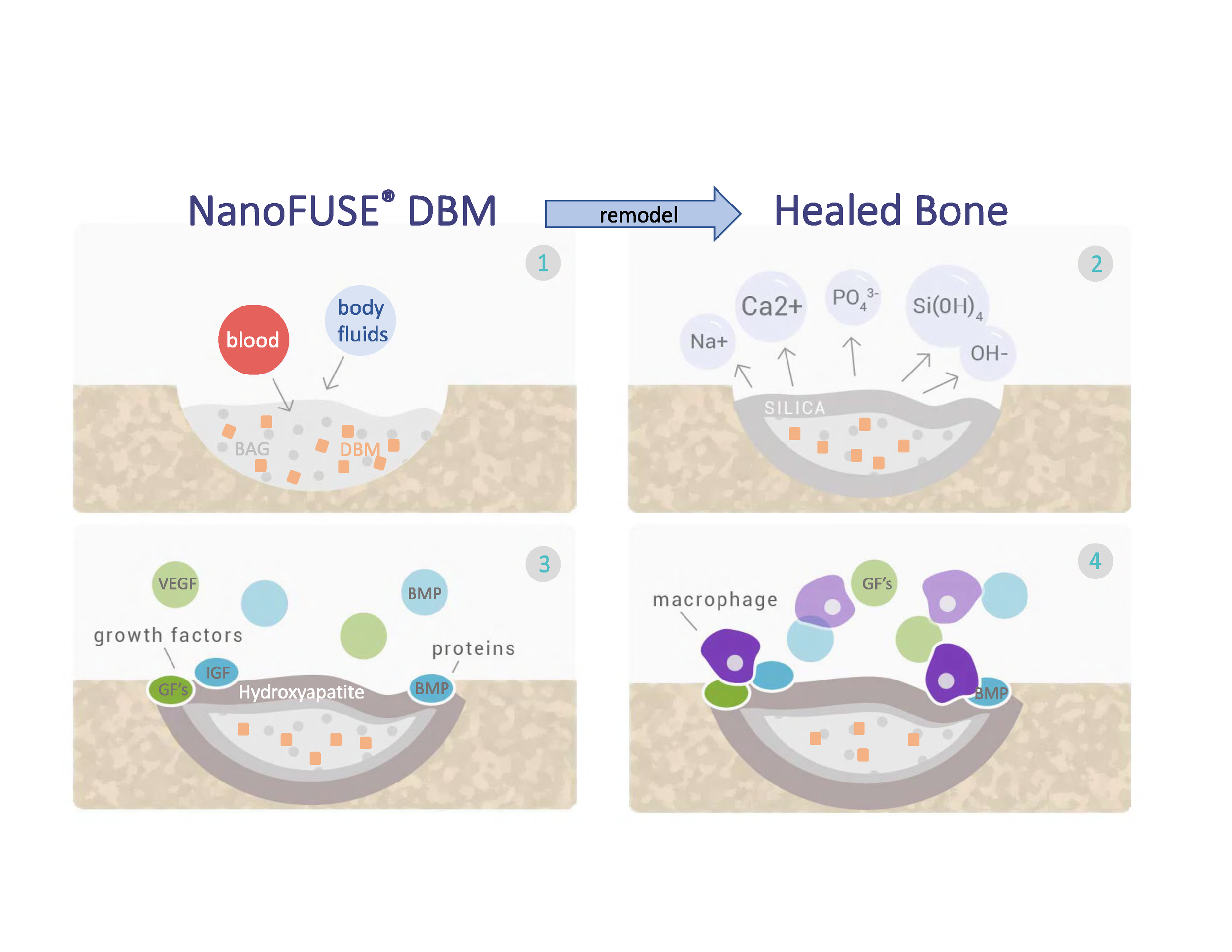
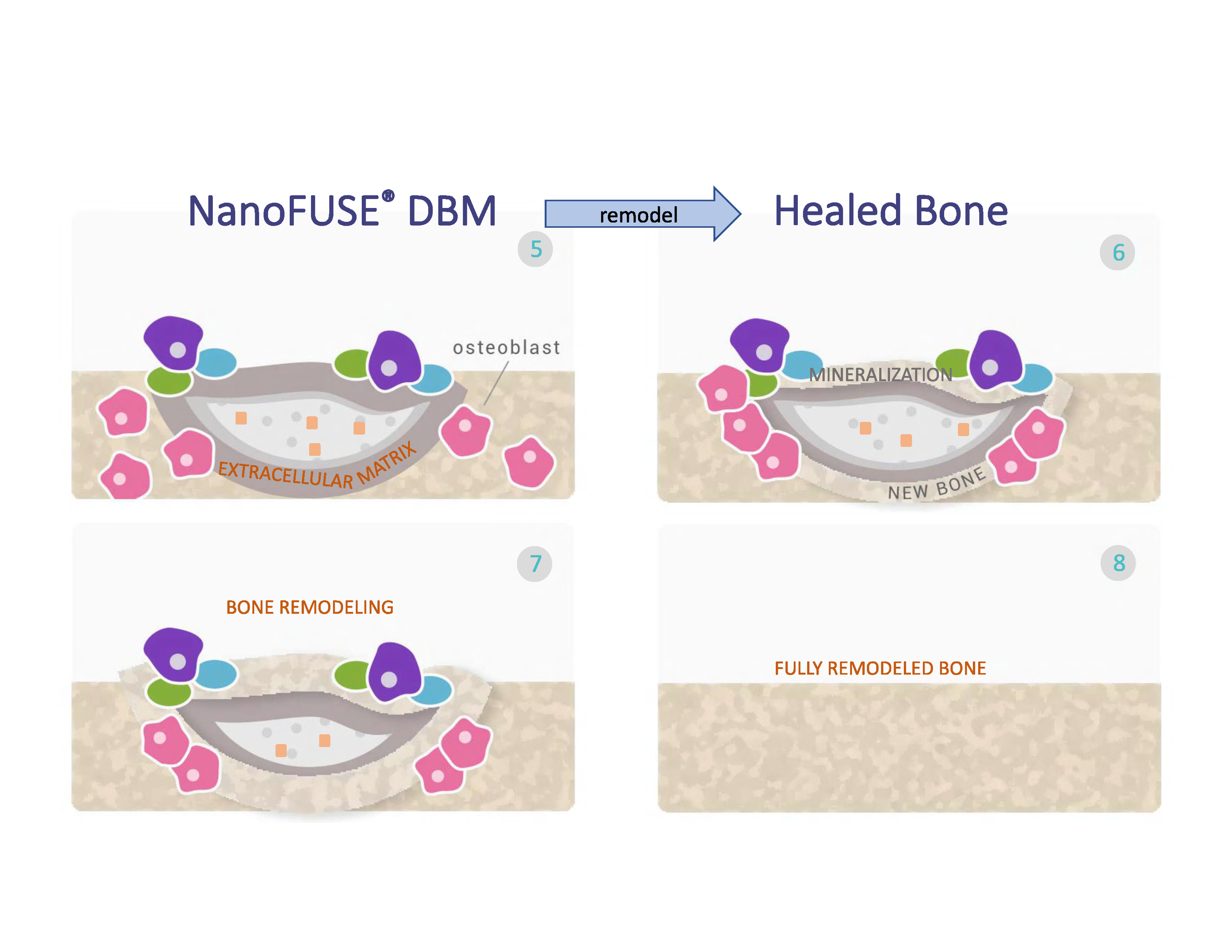
Why 45S5 Bioactive Glass
The Discovery of Bioactive Glass: A Breakthrough Born from Urgency

In the late 1960s, during the height of the Vietnam War, the U.S. military faced a critical challenge: soldiers were surviving traumatic injuries at unprecedented rates, but existing metal implants and inert materials often failed to integrate with the body. Many were rejected or encapsulated by scar tissue.
In 1969, Dr. Larry Hench, a materials scientist at the University of Florida, was approached with a bold question:
Could a material be designed to bond with living bone instead of being walled off by it?
At the time, biomaterials were intentionally designed to be inert — biologically inactive and unreactive. Hench challenged that paradigm.
He developed a silica-based composition known as 45S5 bioactive glass. Unlike traditional implants, 45S5 interacted with physiological fluids, forming a hydroxycarbonate apatite layer chemically and structurally similar to natural bone. For the first time, a synthetic material formed a direct bond with living tissue.
This discovery introduced the concept of “bioactivity” in biomaterials — shifting medicine from passive replacement toward active regeneration.
Since the mid-1980s, 45S5 bioactive glass has been used in millions of orthopedic and dental procedures worldwide and is widely recognized as one of the foundational technologies of modern regenerative medicine.

